
Boosting Demand for Routine Immunization and Reducing Zero-Dose Children in Arunachal Pradesh
Background
Routine Immunization is one of the most effective public health interventions, protecting children from life-threatening diseases and ensuring a healthier future. Since 2019, the VHAI, in partnership with UNICEF, has been working to strengthen immunization coverage in low-performing districts of the country.
Under the GAVI HSS-3 grant, VHAI is implementing the project “Boosting Demand for Routine Immunization and Reducing Zero-Dose Children in 12 Priority Districts of Arunachal Pradesh” (2024–2026). The project focuses on increasing demand for immunization services, identifying zero-dose and dropout children, and mobilizing them through intensive community engagement. By March 2026, the project aims to link at least 70% of zero-dose and partially immunized children in hard-to-reach areas with appropriate immunization services.

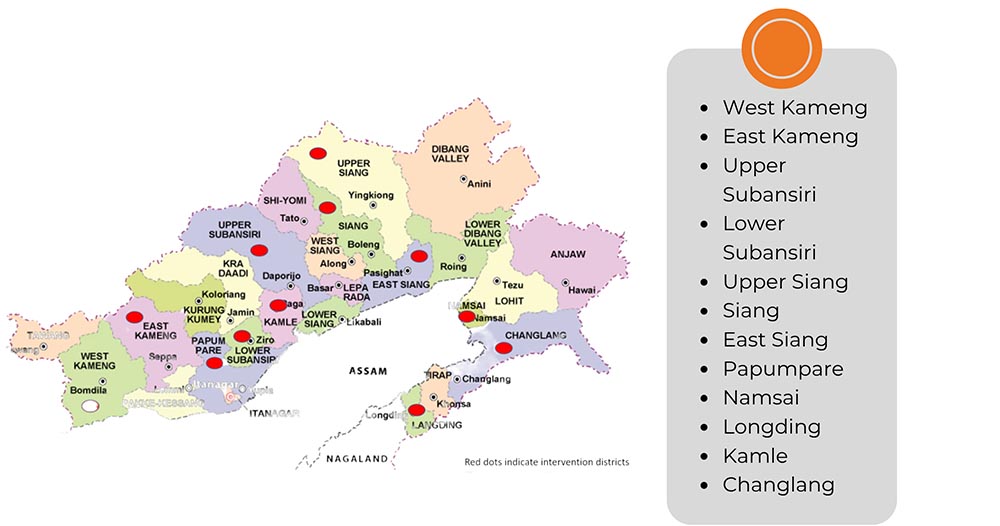
Geographical Coverage
The project is implemented in 36 blocks of 12 low-performing districts of Arunachal Pradesh

Key Interventions
State-Level Orientation & Planning Workshop
Capacity Building of Project Teams
District & Block-Level Orientations
Social Mapping
Community Engagement
Orientation of VHSNC, MAS, and JAS Members
Frontline Worker Trainings
Community Mobilization
Conducted in collaboration with NHM and UNICEF, this workshop officially launched the project and brought together state health officials, development partners, and VHAI’s team to plan effective social and behaviour change (SBC) interventions for improving immunization coverage.
Comprehensive trainings were organized to enhance the team’s understanding of immunization, vaccine hesitancy, and SBC approaches, enabling them to effectively engage and mobilize communities.
Orientation sessions were held with district and block officials, health workers, and frontline staff to identify local challenges, strengthen coordination mechanisms, and plan targeted interventions for better outreach.
Extensive social mapping was conducted in low-performing and hard-to-reach areas to identify social and geographical barriers to immunization and design locally appropriate strategies.
Community Core Groups were formed, involving SHGs, PRIs, buddy mothers, traditional healers, and religious leaders to promote vaccine acceptance, address misconceptions, and support community-led mobilization. The identified influencers and community groups were trained and linked to the identified Zero-dose and missed children to mobilize them for immunization.
Village-level committees were oriented to prioritize immunization in their agendas and actively support the identification and mobilization of left-out and dropout children.
Frontline health workers including ANMs, ASHAs, and AWWs were oriented on technical aspects of immunization, identification of zero-dose children, and collaboration with community networks.
Regular community meetings, male engagement activities, House hold visits, IPC, Rallies and advocacy efforts were undertaken to build trust, dispel myths, and ensure that every eligible child is reached with life-saving vaccines. Events like felicitation of parents of fully immunized children was conducted to motivate other parents for immunization of their children.

Key Achievements of the Project

Intervention
Districts
15

Intervention
Blocks
36

Intervention Villages/Pockets
720

Community Core Groups formed and trained
709
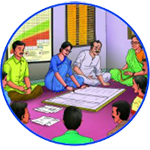
VHSNC/MAS/PRI/JSI groups oriented on Gavi
324
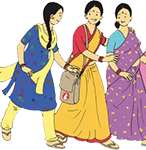
Orientation sessions organized for Frontline workers (ANMs. ASHAs, AWW)
180

Zero dose/LODOR/Missed children identified and mobilized
2100

Orientation sessions organized for District and block level stakeholders (DTFI/BTFI)
44
| Indicator | Achievement |
Number of intervention districts | 12 |
Number of intervention blocks | 36 |
Number of intervention villages/pockets | 720 |
No. of Community Core Groups formed and trained | 709 |
No. of orientation sessions organized for District and block level stakeholders (DTFI/BTFI) | 44 |
No. of VHSNC/MAS/PRI/JSI groups oriented on Gavi | 324 |
No. of orientation sessions organized for Frontline workers (ANMs. ASHAs, AWW) | 180 |
No. of Zero dose/LODOR/Missed children identified and mobilized | 2100 |